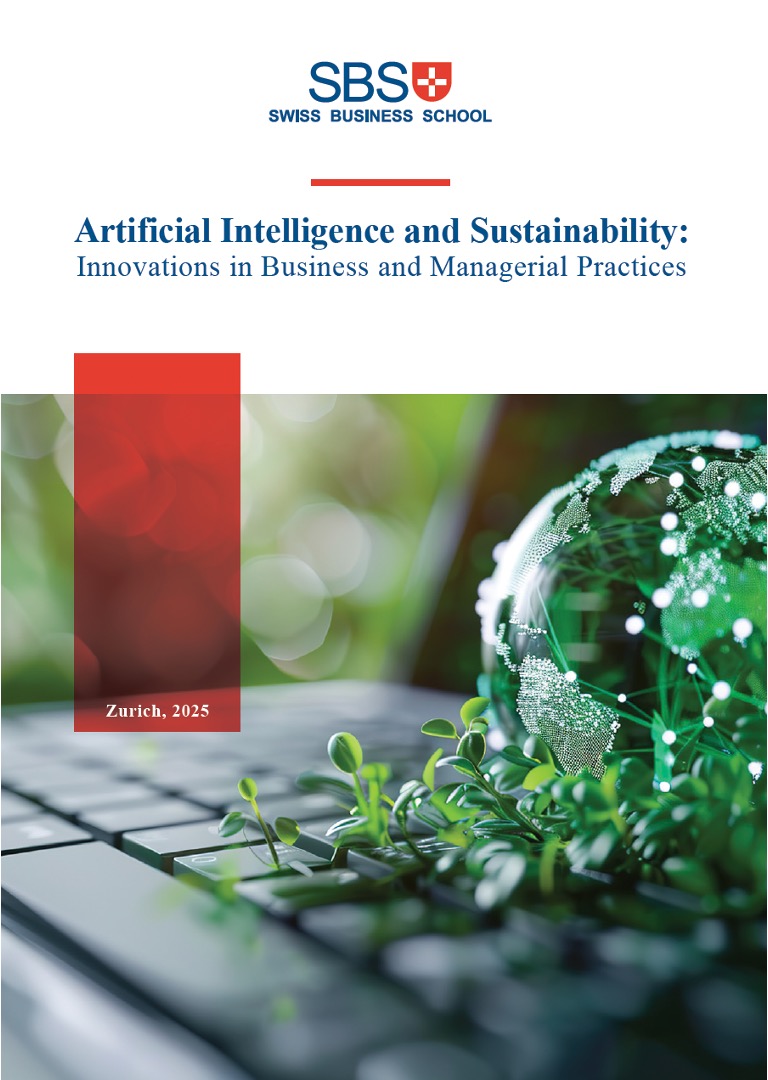
Ethical Dilemmas in Artificial Intelligence Implementations: How to Overcome It?
DOI:
https://doi.org/10.70301/SBS.MONO.2025.1.12Keywords:
AI ethical dilemmas, AI accountability, Ethics principles, AI ethics, Sustainable AI;Abstract
This research explores the ethical dilemmas of implementing artificial intelligence (AI) in businesses and discusses the ethical principles required to address them. This chapter explores the role of ethical considerations in the responsible deployment of AI. It utilizes qualitative research methods, including a systematic literature review on AI and ethics and expert interviews. The literature analysis highlights several key ethical dilemmas associated with AI, including privacy violations, biased decision-making, responsible AI usage, intellectual property rights, and challenges in monitoring AI applications, among others, that arise from AI implementation and its effects on businesses. Although there are currently no guidelines for the ethical implementation of AI, the analysis suggests the potential to create distinct guidelines that can incorporate ethical principles into AI applications, assisting organizations in addressing the identified dilemmas. The dynamic nature of AI technology and socio-economic development necessitates longitudinal research. Future studies should examine these broader societal implications to grasp AI’s influence on business and society. AI applications in business processes, product design, services, and governance raise ethical dilemmas. The authors offer unique insights by exploring the complex relationship between the ethical challenges of AI implementation and the imperative for business innovation and sustainability. Understanding and applying these insights may help organizations achieve their goals by providing more trustworthy and socially acceptable AI-driven products and improving AI-led business processes. This study offers valuable insights for academics, industry leaders, and policymakers seeking to promote responsible and sustainable AI deployment by adhering to ethical principles in its application.
References
Akinrinola, O., Okoye, C. C., Ofodile, O. C., & Ugochukwu, C. E (2024). Navigating and reviewing ethical dilemmas in AI development: Strategies for transparency, fairness, and accountability. GSC Advanced Research and Reviews, 18(3), 050–058. https://doi.org/10.30574/gscarr.2024.18.3.0088
Adeyelu, O. O., Ugochukwu, C. E., & Shonibare, M. A (2024). ETHICAL IMPLICATIONS OF AI IN FINANCIAL DECISION – MAKING: A REVIEW WITH REAL WORLD APPLICATIONS. International Journal of Applied Research in Social Sciences, 6(4), 608–630. https://doi.org/10.51594/ijarss.v6i4.1033
Ayling, J., & Chapman, A (2021). Putting AI ethics to work: are the tools fit for purpose? AI and Ethics, 2(1), 405–429. https://doi.org/10.1007/s43681-021-00084-x
Ali, S. J., Christin, A., Smart, A., & Riitta Katila (2023). Walking the Walk of AI Ethics: Organizational Challenges and the Individualization of Risk among Ethics Entrepreneurs. ArXiv (Cornell University). https://doi.org/10.1145/3593013.3593990
Anjum, P. G., Soni, P. K., Prof. Khushboo Choubey, Priyanshi Warkad, & Saniya Choubey (2023). Incorporating AI into Business Education: Examining Ethical Issues with Case Study Illustrations. International Journal of Innovative Research in Computer and Communication Engineering, 11(06), 8884–8889. https://doi.org/10.15680/ijircce.2023.1106075
Bolte, L., & Aimee van Wynsberghe (2024). Sustainable AI and the third wave of AI ethics: a structural turn. AI and Ethics. https://doi.org/10.1007/s43681-024-00522-6
Bubicz, M., & Ferasso, M (2024). Advancing Corporate Social Responsibility in AI-driven Human Resources Management: A Maturity Model Approach. International Conference on AI Research, 4(1), 82–90. https://doi.org/10.34190/icair.4.1.3016
Chettiar, F. & Joy, J (2024). Navigating Ethical Dilemmas: The Role of AI in Supply Chain Decision-Making. International Journal for Research in Applied Science and Engineering Technology, 12(10), 460–467. https://doi.org/10.22214/ijraset.2024.64552
DELL (2022) Dell Technologies Principles for Ethical Artificial Intelligence Dell Technologies Principles for Ethical Artificial Intelligence. DELL. https://www.delltechnologies.com/asset/en-us/solutions/business-solutions/briefs-summaries/principles-for-ethical-ai.pdf
Eflova, M., Yulia Vinogradova, & Aleksandr Vitushkin (2023). The impact of artificial intelligence on the development of modern society. E3S Web of Conferences, 449, 07005–07005. https://doi.org/10.1051/e3sconf/202344907005
Etzioni, A., & Etzioni, O (2017). Incorporating Ethics into Artificial Intelligence. The Journal of Ethics, 21(4), 403–418. https://doi.org/10.1007/s10892-017-9252-2
Farzin, O., & Sameie, R (2023). Ethical and Legal Challenges of Using Artificial Intelligence in Digital Businesses. Journal of Technology in Entrepreneurship and Strategic Management, 2(2), 17-27.
Ferrario, A., Loi, M., & Viganò, E (2019). In AI We Trust Incrementally: a Multi-layer Model of Trust to Analyze Human-Artificial Intelligence Interactions. Philosophy & Technology, 33(3), 523–539. https://doi.org/10.1007/s13347-019-00378-3
Google (2023). Google AI Principles. Google AI. https://ai.google/responsibility/principles/
Groșanu, A., Melinda-Timea Fülöp, & Nicolae Măgdaș (2024). Ethical Dilemmas in Digital Accounting: A Comprehensive Literature Review. Contabilitatea, Expertiza Şi Auditul Afacerilor, 5(4), 56–67. https://doi.org/10.37945/cbr.2024.04.06
Gunn-Rosas, C. L (2024). Beyond the Binary: AI, Ethics, and Liability in the Legal Landscape. Texas A&M Journal of Property Law, 10(3), 389–410. https://doi.org/10.37419/jpl.v10.i3.2
Hagendorff, T (2020). The ethics of AI ethics: An evaluation of guidelines. Minds and Machines, 30(1), 99–120. https://doi.org/10.1007/s11023-020-09517-8
He, H., & Chonlavit Sutunyarak (2024). Perception of Corporate Social Responsibility, Organizational Commitment and Employee Innovation Behavior: A Survey from Chinese AI Enterprises. Journal of Risk and Financial Management, 17(6), 237–237. https://doi.org/10.3390/jrfm17060237
Huang, C., Zhang, Z., Mao, B., & Yao, X (2022). An Overview of Artificial Intelligence Ethics. IEEE Transactions on Artificial Intelligence, 4(4), 1–21. https://doi.org/10.1109/tai.2022.3194503
IBM (2024). AI Ethics | IBM. Www.ibm.com. https://www.ibm.com/impact/ai-ethics
Ifeoluwa Oladele, Adeyinka Orelaja, & Oladayo Tosin Akinwande (2024). Ethical Implications and Governance of Artificial Intelligence in Business Decisions: A Deep Dive into the Ethical Challenges and Governance Issues Surrounding the Use of Artificial Intelligence in Making Critical Business Decisions. International Journal of Latest Technology in Engineering Management & Applied Science, XIII(II), 48–56. https://doi.org/10.51583/ijltemas.2024.130207
Inter-Parliamentary Union (2025), Ethic principles: Societal and environmental well-being. https://www.ipu.org/ai-guidelines/ethical-principles-societal-and-environmental-well-being
Ikkatai, Y., Hartwig, T., Takanashi, N., & Yokoyama, H. M (2022). Octagon Measurement: Public Attitudes toward AI Ethics. International Journal of Human–Computer Interaction, 38(17), 1–18. https://doi.org/10.1080/10447318.2021.2009669
Jobin, A., Ienca, M., & Vayena, E (2019). The Global Landscape of AI Ethics Guidelines. Nature Machine Intelligence, 1(9), 389–399. https://doi.org/10.1038/s42256-019-0088-2
Lane, L (2023). Artificial Intelligence and Human Rights: Corporate Responsibility in AI Governance Initiatives. Nordic Journal of Human Rights, 1–22. https://doi.org/10.1080/18918131.2022.2137288
Lockheed Martin (2023). Artificial Intelligence and Aegis: The Future is Here. Lockheed Martin. https://www.lockheedmartin.com/en-us/news/features/2023/artificial-intelligence-and-aegis-the-future-is-here.html
Martin, K., & Villegas-Galaviz, C (2022). AI and Corporate Responsibility. Springer EBooks, 1–5. https://doi.org/10.1007/978-3-319-23514-1_1297-1
Microsoft (2019). Responsible AI Principles and Approach | Microsoft AI. Microsoft.com. https://www.microsoft.com/en-us/ai/principles-and-approach/#tabs-pill-bar-ocb9d4_tab0
Morley, J., Elhalal, A., Garcia, F., Kinsey, L., Mökander, J., & Floridi, L (2021). Ethics as a Service: a Pragmatic Operationalisation of AI Ethics. Minds and Machines, 31. https://doi.org/10.1007/s11023-021-09563-w
Morley, J., Kinsey, L., Elhalal, A., Garcia, F., Ziosi, M., & Floridi, L (2021). Operationalising AI ethics: barriers, Enablers and next Steps. AI & Society, 38. https://doi.org/10.1007/s00146-021-01308-8
OECD. (2024). Artificial intelligence. OECD. https://www.oecd.org/en/topics/policy-issues/artificial-intelligence.html
Olatoye, F. O., Awonuga, K. F., Mhlongo, N. Z., Ibeh, V., Elufioye, O. A., & Ndubuisi, L (2024). AI and ethics in business: A comprehensive review of responsible AI practices and corporate responsibility. International Journal of Science and Research Archive, 11(1), 1433–1443. https://doi.org/10.30574/ijsra.2024.11.1.0235
Olatoye, F. O., Awonuga, K. F., Mhlongo, N. Z., Ibeh, V., Elufioye, O. A., & Ndubuisi, L (2024). AI and ethics in business: A comprehensive review of responsible AI practices and corporate responsibility. International Journal of Science and Research Archive, 11(1), 1433–1443. https://doi.org/10.30574/ijsra.2024.11.1.0235
Pfizer (2023). Artificial Intelligence (AI) Responsibility in Healthcare is Critical | Pfizer. Www.pfizer.com. https://www.pfizer.com/news/articles/three_principles_of_responsibility_for_artificial_intelligence_ai_in_healthcare
Shkalenko, A. V., & Nazarenko, A. V (2024). Integration of AI and IoT into Corporate Social Responsibility Strategies for Financial Risk Management and Sustainable Development. Risks, 12(6), 87–87. https://doi.org/10.3390/risks12060087
Singh, V., & Shah, P. B (2024). AI AND ETHICS. INTERANTIONAL JOURNAL of SCIENTIFIC RESEARCH in ENGINEERING and MANAGEMENT, 08(03), 1–5. https://doi.org/10.55041/ijsrem29381
Stahl, B. C (2023). Embedding responsibility in intelligent systems: from AI ethics to responsible AI ecosystems. Scientific Reports, 13(1), 7586. https://doi.org/10.1038/s41598-023-34622-w
UNESCO (2021, November 23). Recommendation on the Ethics of Artificial Intelligence. Unesco.org. https://unesdoc.unesco.org/ark:/48223/pf0000381137
Vasyl Ivchyk, & Nataliia Shmatko (2024). EXAMINING THE ETHICAL CONSIDERATIONS OF USING ARTIFICIAL INTELLIGENCE IN BUSINESS MANAGEMENT. Scientific Notes of Taurida National v I Vernadsky University Series Economy and Management, 74(3). https://doi.org/10.32782/2523-4803/74-3-10
Waelen, R (2022). Why AI Ethics Is a Critical Theory. Philosophy & Technology, 35(1). https://doi.org/10.1007/s13347-022-00507-5
Wei, M., & Zhou, Z (2022). AI Ethics Issues in Real World: Evidence from AI Incident Database. https://doi.org/10.48550/arxiv.2206.07635
World Economic Forum (2021). 9 ethical AI principles for organizations to follow. https://www.weforum.org/stories/2021/06/ethical-principles-for-ai/?gad_source=1&gclid=CjwKCAiAiOa9BhBqEiwABCdG89MYsdVjcBjdtsZw7ItWwKOWxmsosEnS5Ry3rTN3HwH6KAU51-3WzBoCvF4QAvD_BwE
Additional Files
Published
Issue
Section
License
Copyright (c) 2025 Gatis Polis, Tatjana Volkova (Author)

This work is licensed under a Creative Commons Attribution 4.0 International License.
Publication Agreement
This Publication Agreement ("Agreement") is made between the author(s) ("Author") and the SBS Journal of Applied Business Research ("Journal"). By submitting a manuscript for publication, the Author agrees to the following terms:
1. Grant of License
The Author retains full copyright ownership of the submitted and published work. The Author grants the Journal a non-exclusive license to publish, distribute, and archive the article in any format or medium, including but not limited to online and print versions.
2. Open Access and Licensing
All articles published in the Journal are fully open access under the Creative Commons Attribution 4.0 International License (CC BY 4.0). This means that:
• The work can be freely used, shared, and adapted by anyone, provided that proper attribution is given to the original Author.
• The full license terms can be found at https://creativecommons.org/licenses/by/4.0/.
• No additional restrictions are placed on the use of published articles.
3. Author Responsibilities and Warranties
The Author guarantees that:
• The submitted work is original and has not been published or submitted for publication elsewhere.
• The work does not infringe on any third-party rights, including copyright, trademark, or proprietary rights.
• All necessary permissions for copyrighted materials used in the manuscript (e.g., figures, tables) have been obtained.
• The manuscript complies with ethical research standards and does not contain any form of plagiarism or falsified data.
4. Editorial and Publication Process
• The Journal reserves the right to perform editorial revisions for clarity, formatting, and consistency while maintaining the integrity of the Author’s work.
• The publication of an article is subject to peer review, and acceptance is not guaranteed upon submission.
5. Retraction and Corrections
• The Journal follows COPE (Committee on Publication Ethics) guidelines and reserves the right to retract, correct, or withdraw an article in cases of misconduct, errors, or ethical concerns.
6. Governing Law
This Agreement is governed by the laws of Switzerland. Any disputes arising under this Agreement shall be resolved in the courts of Zurich, Switzerland.
7. Agreement Acceptance
By submitting a manuscript, the Author acknowledges and agrees to the terms outlined in this Agreement.
Editor-In-Chief
Prof. Dr. Milos Petkovic