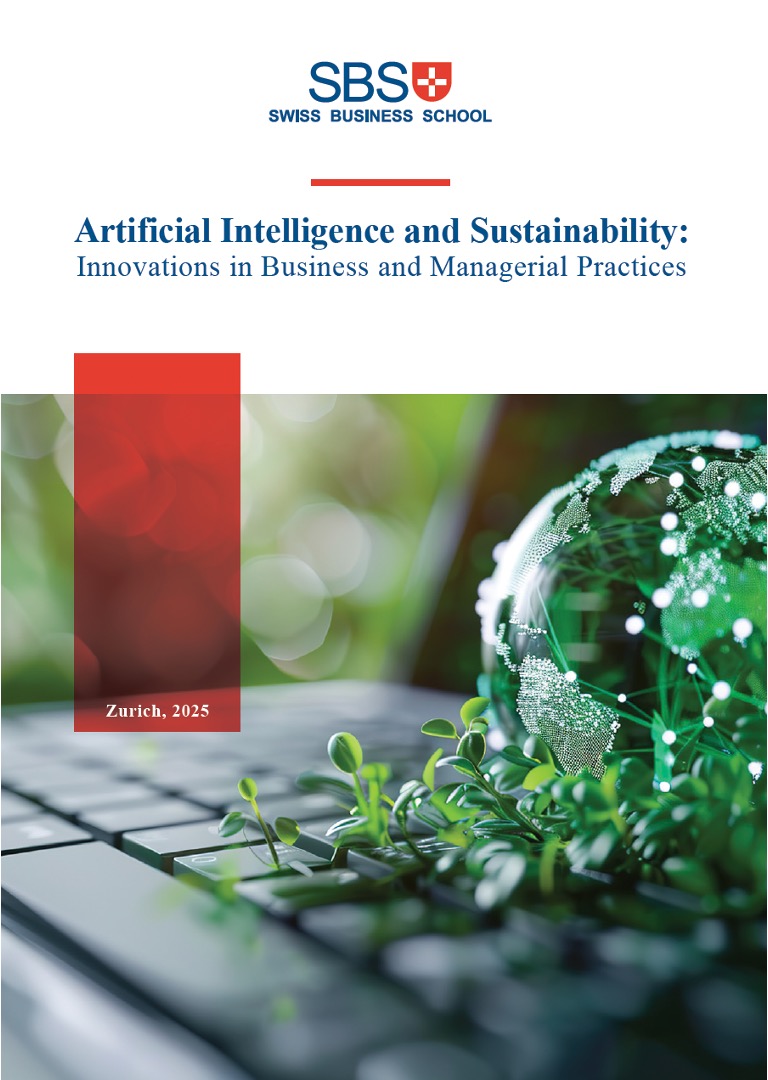
The Sustainability Paradox of Artificial Intelligence: How AI Both Saves and Challenges Resource Management Efforts
DOI:
https://doi.org/10.70301/SBS.MONO.2025.1.4Keywords:
Sustainable AI, AI and Environmental Sustainability, Energy-Efficient AI and Green Technology, Sustainable AI Impact Assessment, AI Policy and Global Sustainability;Abstract
The net gain of AI and sustainable development remains a critical area of inquiry, as Artificial Intelligence (AI) offers opportunities and challenges in advancing sustainability. AI offers benefits like optimized energy use and improved resource efficiency, but its rapid adoption also results in high energy consumption, increased e-waste, and resource depletion. This contradiction is referred to as the Sustainability Paradox and calls for a structured evaluation of AI’s impact. The Sustainable AI Impact Assessment Framework (SAIAF) serves as a tool to measure AI’s role in sustainability while accounting for its unintended consequences. It assesses AI across three dimensions: environmental (carbon footprint, energy use), social (labor market changes, ethical issues), and economic (cost efficiency, long-term resilience). Case studies in precision agriculture and smart energy grids demonstrate how SAIAF aids policymakers and industries in minimizing negative impacts while enhancing the sustainability gains of AI. However, fragmented global policies complicate the effective implementation of AI for sustainability, leading to inconsistent regulations and misaligned objectives. This paper highlights the importance of cohesive AI governance and shared sustainability standards. By incorporating SAIAF into policies and industry practices, AI can shift from being resource-heavy to becoming a strategic sustainability ally. The study suggests further research on the sustainability of AI lifecycles, adaptive policies, and innovations in energy-efficient AI systems for a more balanced and responsible future.
References
AllHRSoftware. (2024). 10 Best Predictive Analytics Tools for HR 2024. HR List Software. https://allhrsoftware.com/blog/10-best-predictive-analytics-tools-for-hr-2024/
Ahmad, S. (2024, December 11). Retrieved from https://hir.harvard.edu/lithium-triangle/
Amnesty International. (2024, December 23). Retrieved from https://www.amnesty.org/en/documents/afr62/3183/2016/en/
Bender, E. M., Gebru, T., McMillan-Major, A., & Shmitchell, S. . (2021). On the Dangers of Stochastic Parrots: Can Language Models Be Too Big? Proceedings of the 2021 ACM Conference on Fairness, Accountability, and Transparency, (pp. 610–623. DOI: 10.1145/3442188.3445922).
Bosselmann, K. (2010). Losing the Forest for the Trees: Environmental Reductionism in the Law. Sustainability, 2(8), 2424-2448. https://doi.org/10.3390/su2082424.
Brundtland, G. H. (1987). Our Common Future. United Nations.
Dunn, J. B., Gaines, L., Sullivan, J., & Wang, M. Q. (2012). Impact of Recycling on Cradle-to-Gate Energy Consumption and Greenhouse Gas Emissions of Automotive Lithium-Ion Batteries. Environmental Science & Technology 46 (22), 12704-12710 DOI: 10.1021/es302420z.
Elkington, J. (1997). Cannibals with Forks: The Triple Bottom Line of 21st Century Business. Oxford.
European Commission. (2024). Retrieved from https://eur-lex.europa.eu/legal-content/EN/TXT/?uri=CELEX%3A32024R1689
Forti, V., Baldé, C. P., Kuehr, R., & Bel, G. (2022). The Global E-Waste Monitor 2020. United Nations University. ISBN: 978-92-808-9114-0.
Fraisl, D., See, L., Fritz, S. et al. (2024). Leveraging the collaborative power of AI and citizen science for sustainable development. Nat Sustain, https://doi.org/10.1038/s41893-024-01489-2.
Frimpong, V. (2024). Cultural and Regional Influences on Global AI Apprehension. Qeios, doi:10.32388/YRDGEX.3.
Gao Y., Skutsch M., Masera O. & Pacheco P. (2011). A global analysis of deforestation due to biofuel development. Retrieved from https://www.cifor-icraf.org/publications/pdf_files/WPapers/WP68Pacheco.pdf
Gill, S. S., & Kaur, R. (2023). ChatGPT: Vision and challenges. Internet of Things and Cyber-Physical Systems, 3, 262–271.
Gogsadze, N. (2022, October ). From fragmentation to policy coordination: Why does it matter? Retrieved from https://ipcig.org/sites/default/files/pub/en/OP524_From_fragmentation_to_policy_coordination.pdf
Goldman Sachs. (2024, May 14). Retrieved from https://www.goldmansachs.com/insights/articles/AI-poised-to-drive-160-increase-in-power-demand
Gupta, S. (2015). Enhancing brand equity through sustainability: waste recycling. Thunderbird International Business Review, 58(3), 213–223. https://doi.org/10.1002/tie.21730.
Gupta, S. (2015). Reverse marketing and sustainability: Impacts of recycling on brand equity. Journal of Marketing Sustainability, 7(3), 19–34.
Hagendorf, T. (2024). Mapping the Ethics of Generative AI: A Comprehensive Scoping Review. Minds and Machines 34(39), https://doi.org/10.1007/s11023-024-09694-w.
IBM. (2024, December 13). Retrieved from https://www.ibm.com/thought-leadership/institute-business-value/report/2022-consumer-study
Jonker, A. (2023, December 1). IBM. Retrieved from https://www.ibm.com/think/topics/triple-bottom-line
Kok JN, Boers EJ, Kosters WA, et al. (2009). Artificial intelligence: Definition, trends, techniques, and cases. Artificial Intelligence 1, 270–29.
Kumar, M., Raut, R., Jagtap, S., & Choubey, V. (2022). Circular economy adoption challenges in the food supply chain for sustainable development. Business Strategy and the Environment, 32(4), 1334-1356. https://doi.org/10.1002/bse.3191.
Porter, M. and Kramer, R. (2011). Creating Shared Value. Harvard Business Review, Vol. 89, No. 1, 2-17.
Manyika, J., Chui, M., Bughin, J., Dobbs, R., Bisson, P., & Marrs, A. (2017). Jobs Lost, Jobs Gained: Workforce Transitions in an Era of Automation. McKinsey Global Institute.
Miller, K. (2000, December 8). Harvard Business School Online. Retrieved from https://online.hbs.edu/blog/post/what-is-the-triple-bottom-line
Nabil, R. (2024, February 2). Yale. Retrieved from https://www.yalejournal.org/publications/global-ai-governance-and-the-united-nations
Nguyen, T., & Le, H. . (2023). Adaptive AI in Education: Building Human Capacity for Sustainable Economies. Journal of Educational Technology, 20(3), 45–60 DOI: 10.1007/s10956-021-09901-2.
Oliveira, M. E., Silva, R. D., & Cruz, J. P. . (2021). The Environmental Cost of Rare-Earth Element Extraction: A Review. Environmental Research Letters, 16(4).
Patterson, D.A., Gonzalez, J., Le, Q., Liang, C., Munguía, L., Rothchild, D., So, D.R., Texier, M., & Dean, J. . (2021). Carbon Emissions and Large Neural Network Training: Assessing Energy Consumption Trends. ArXiv, abs/2104.10350.
Purvis, B., Mao, Y. & Robinson, D. . (2019). Three pillars of sustainability: in search of conceptual origins. Sustain Sci 14., 681–695 https://doi.org/10.1007/s11625-018-0627-5.
Rajeshwari Ganesan, Jeff Mosier. (2024, April 02). Infosys. Retrieved from https://www.infosys.com/iki/perspectives/ais-growth-exponential.html
Salas-Navarro, K., Castro-García, L., Assan-Barrios, K., Vergara-Bujato, K., & Zamora-Musa, R. . (2024). Reverse Logistics and Sustainability: A Bibliometric Analysis. Sustainability, 16(13), 5279 https://doi.org/10.3390/su16135279.
Shelby, R., Rismani, S., Henne, K., Moon, A., Rostamzadeh, N., Nicholas, P., Yilla-Akbari, N., Gallegos, et al. . (2023). Sociotechnical harms of algorithmic systems: Scoping a taxonomy for harm reduction. In S. D.-B. F. Rossi. ACM.
Singh, R., Gupta, P., & Arora, S. (2023). Reserve Sustainability: Conceptual Foundations and Implications. Sustainability Science, 18(2), 123–137. DOI: 10.1007/s11625-022-01100-3.
Strubell, E., Ganesh, A., & McCallum, A. (2019). Energy and Policy Considerations for Deep Learning in NLP. Proceedings of the 57th Annual Meeting of the Association for Computational Linguistics, 57, (pp. 3645–3650. DOI: 10.18653/v1/P19-1355).
Sueyoshi, T., & Goto, M. . (2019). Corporate sustainability assessment: Measuring economic, environmental, and social efficiencies. Journal of the Operational Research Society, 70(12), 2187-2203. DOI: 10.1080/01605682.2018.1537593.
Sun, C., Chen, H., & Luo, Z. (2022). Federated Learning for Data Sustainability: Balancing Efficiency and Privacy. IEEE Transactions on Neural Networks and Learning Systems, 33(5), 2021–2032. DOI: 10.1109/TNNLS.2021.3083456.
Tabbakh, A., Al Amin, L., Islam, M. et al. . (2024). Towards sustainable AI: A comprehensive framework for Green AI. Discov Sustain 5(408) , https://doi.org/10.1007/s43621-024-00641-4.
UNEP. (2024, December 28). Retrieved from https://www.unep.org/news-and-stories/story/ai-has-environmental-problem-heres-what-world-can-do-about
United Nations General Assembly. (1987). Report of the World Commission on Environment and Development: Our Common Future. Transmitted to the General Assembly as an Annex to document A/42/427 – Development and International Co-operation: Environment. Retrieved from https://sustainabledevelopment.un.org/content/documents/5987our-common-future.pdf
Verónica Bolón-Canedo, Laura Morán-Fernández, Brais Cancela, Amparo Alonso-Betanzos. (2024). A review of green artificial intelligence: Towards a more sustainable future. Neurocomputing, Volume 599, https://doi.org/10.1016/j.neucom.2024.128096.
Vinuesa, R., Azizpour, H., Leite, I. et al. . (2020). The role of artificial intelligence in achieving the Sustainable Development Goals. Nat Commun 11(233) , https://doi.org/10.1038/s41467-019-14108-y.
Wang, X., Jiang, P., Yang, L., Fan, Y.V., Klemeš, J.J. and Wang, Y. (2021). Extended Water-Energy Nexus Contribution to Environmentally-Related Sustainable Development Goals. Renewable and Sustainable Energy Reviews, 150. Article 111485, https://doi.org/10.1016/j.rser.2021.111485.
Weforum. (2024, December 23). Retrieved from https://www.weforum.org/stories/2024/09/ai-accelerator-sustainability-silver-bullet-sdim/
Winston, A. (2024, July 11). MITSLOAN. Retrieved from https://sloanreview.mit.edu/article/will-ai-help-or-hurt-sustainability-yes/
Additional Files
Published
Issue
Section
License
Copyright (c) 2025 Victor Frimpong (Author)

This work is licensed under a Creative Commons Attribution 4.0 International License.
Publication Agreement
This Publication Agreement ("Agreement") is made between the author(s) ("Author") and the SBS Journal of Applied Business Research ("Journal"). By submitting a manuscript for publication, the Author agrees to the following terms:
1. Grant of License
The Author retains full copyright ownership of the submitted and published work. The Author grants the Journal a non-exclusive license to publish, distribute, and archive the article in any format or medium, including but not limited to online and print versions.
2. Open Access and Licensing
All articles published in the Journal are fully open access under the Creative Commons Attribution 4.0 International License (CC BY 4.0). This means that:
• The work can be freely used, shared, and adapted by anyone, provided that proper attribution is given to the original Author.
• The full license terms can be found at https://creativecommons.org/licenses/by/4.0/.
• No additional restrictions are placed on the use of published articles.
3. Author Responsibilities and Warranties
The Author guarantees that:
• The submitted work is original and has not been published or submitted for publication elsewhere.
• The work does not infringe on any third-party rights, including copyright, trademark, or proprietary rights.
• All necessary permissions for copyrighted materials used in the manuscript (e.g., figures, tables) have been obtained.
• The manuscript complies with ethical research standards and does not contain any form of plagiarism or falsified data.
4. Editorial and Publication Process
• The Journal reserves the right to perform editorial revisions for clarity, formatting, and consistency while maintaining the integrity of the Author’s work.
• The publication of an article is subject to peer review, and acceptance is not guaranteed upon submission.
5. Retraction and Corrections
• The Journal follows COPE (Committee on Publication Ethics) guidelines and reserves the right to retract, correct, or withdraw an article in cases of misconduct, errors, or ethical concerns.
6. Governing Law
This Agreement is governed by the laws of Switzerland. Any disputes arising under this Agreement shall be resolved in the courts of Zurich, Switzerland.
7. Agreement Acceptance
By submitting a manuscript, the Author acknowledges and agrees to the terms outlined in this Agreement.
Editor-In-Chief
Prof. Dr. Milos Petkovic